
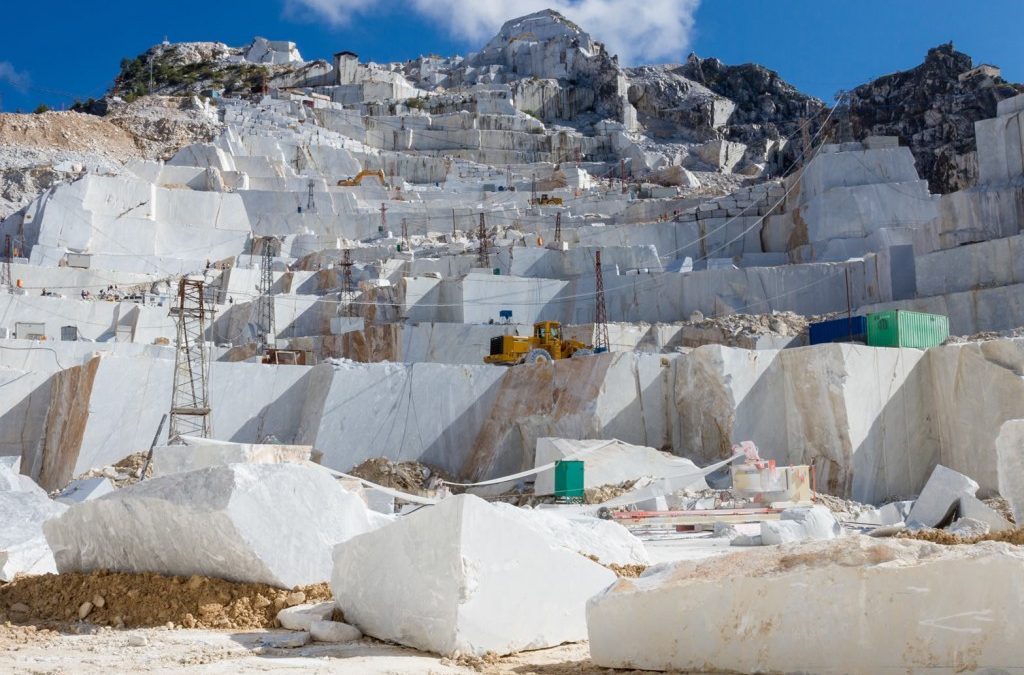
Where is granite found?
Granite is quarried from the earth with specialized equipment and machinery. It is found all over the world. A few parts of the world where granite is quarried are Argentina, Brazil, Canada, China, Egypt, Finland, India, Italy, Norway, Portugal, Saudi Arabia, South Africa, Spain, Sri Lanka, Sweden, Ukraine, USA, Zambia, and Zimbabwe. Troy Granite buys granite directly from the quarried without a middleman and provides granite countertops to Delaware, Pennsylvania, Maryland, and NJ homes.
What is Granite?
Granite is a coarse-grained crystalline igneous rock composed primarily of quartz and feldspar. It forms from slowly cooling magma that is subjected to extreme pressures deep beneath the earth’s surface.
What is the difference between marble and granite countertops?
The look first and foremost. The maintenance and care of the stones will also vary. Marble colors are a softer stone, and it will etch easier. It is a more delicate natural stone when compared to granite. Troy Granite has over 2000 slabs and marble in the showroom; you can visit and see the difference.
What is the strength of granite?
Granite is a very strong and durable natural stone. The actual strength of a specific piece of granite will vary depending on the stone and where it was quarried.
Will my granite countertop break?
YES, it will with heavy abuse. NO, it will not be normal everyday wear and tear.
Do I need to seal my granite countertops?
There are a lot of different sealer brand names on the market; some of them give one-year protection promises, and others offer up to 5-6 years. As an expert, we recommend putting sealer on your countertop once a year. It is a hassle-free easy application and takes less than ten minutes. You need to put sealer on the countertop once a year for better protection. This depends on the granite you choose. As a rule of thumb, “The lighter stones need to be sealed, and the darker ones don’t. Troy Granite now offers a 15-year sealer warranty. Existing and new Delaware, Pittsburgh, and Harrisburg granite countertops customers can give us a call and ask for details.
What is etching?
Etching is when acids from items such as lemons, alcohol, and even some cleaning products leave dull spots or rings on a stone. Etching is an issue for marble countertops but not for granite countertops.
Will my granite etch?
It shouldn’t. Granite is a siliceous natural stone and not highly reactive to acids like marble or limestone. If your granite is sealed, the sealer may etch.
Can I cut on my granite countertops?
Yes you can. Granite is very hard and will dull your knives. Little slivers of the knife may become embedded in your countertop. This is very noticeable with darker granites.
Will granite chip?
It can. It is usually around the sink or near an edge if it chips. The chip is usually small and invisible, but you can feel it. This is easy to repair. A colored epoxy is used to fill in the small area. If you did get a larger chip, save it so it can be used to repair your countertop.
Will granite scratch?
No, not usually. The only things that may scratch it are diamonds, other pieces of granite, and some green kitchen scrub pads. Granite can only be scratched by materials that are harder than granite.
Will granite burn?
No, it can withstand heat up to 1200F. You can set hot pots on your granite countertop without worrying about charring or scorching your granite.
What are seams and do I need them?
Seams are joints where two pieces of stone meet or join together. Granite slabs are very big, but larger kitchens may need a seam or two. You will usually need seams if you have curves, arches, or really long spans of granite.
What is the weight of granite?
The weight of granite depends on its density. The average 3/4″ thick granite weighs 13 pounds per square foot, 1 1/4″ thick granite weighs around 18 to 20 pounds per square foot, and 2″ thick granite weighs about 30 pounds per square foot. The darker stones are usually heavier than the lighter stones.
What is the thickness of a granite countertop?
2cm =3/4″, 3cm =1 1/4″, 3cm is the preferred thickness for granite countertops. Troy Granite uses 3cm thickness granite for countertops projects.
Will my cabinets support granite countertops?
Most cabinets will as long as they’re sturdy. Granite spreads its weight out like a waterbed does. Your cabinets may need to be reinforced if they are not sturdy enough. Troy Granite experts check your cabinet’s strength.
Do I need underlayment?
Not with 1 1/4″ granite. If you plan to use 3/4″, you may
What are some of the uses of granite?
It is used in the exteriors and interiors of homes and commercial buildings. The most common uses are for headstones and kitchen countertops. Some other examples include fireplaces, bars, vanities, sinks, cabinet handles, outlet switch plate covers, tables, walls, benches, fountains, shower surrounds, and flooring. If you can imagine it, you can use granite.
What is the granite installation time frame?
99% of Troy Granite’s countertop installation takes a day. Very rarely and depending on the size of your job, it might take two. Troy Granite’s regular turnaround time is 10 days. Preparations before installation, such as cutting, polishing, and getting your stone to the shop can take anywhere from a week to a month or so.
How to clean granite countertops?
A mild dish soap and water will work. But, a soap build-up may occur over time if you don’t rinse your countertops well.
What are some of the granite countertop colors?
There are hundreds of granite colors and color combinations. The “groups” of colors are white, black/gray, brown, blue, green, red, pink, yellow, and violet.
How much does a granite countertop cost?
Granite countertop costs will vary depending on your region and the type of granite colors you choose. Exotics are hard to find, and blues are usually more expensive. Sink cutouts, outlet holes, arches, and curves, and special edgings and tear-outs of old countertops add to the cost. Troy Granite has the most reasonable prices and the best service quality.
We have granite specials if you live in Delaware, Maryland, and NJ. $1499 Special
If you are living in Pittsburgh and the surrounding area here’s special. Here, granite special for Central PA and the surrounding area
For more information, please visit https://troygranite.com
Recent Comments